In an interesting phone interview with Forest Therapy Mentor Caitlin Williams, she was able to go in-depth about the Association of Nature and Forest Therapy’s (ANFT) 2019 forest therapy training guide exercise in Puerto Rico.
Williams is a “Mentor Training Project Manager” within the organization and her position’s role is to work with other managers and help them train people to become guides. She along with other mentors, train these guides to be able to assist their clients in, “developing intimacy with the natural world”. She noted how in teaching when and where people get connected with nature, one is able to understand the correlation between health and the natural environment more fluidly.
The project occurred in November of 2019 with the intended mission of delivering forest therapy training along with citizen science and to, “provide access and have a Spanish program.” Notably the project had collaborations between several organizations and 21 participants. There was a focus of becoming a “bridging point” between forest therapy and scientific conservation. The key questions one must ask themselves in forest therapy are,
“what do we feel and how are we connected to this.”
Nadine Williams
When asked what kind of work was done during the project, Williams responded by explaining there was, “two different trainings” going on. The two areas of training were consistent with forest therapy and citizen science. A day of training during the project might have entailed a morning walk, an afternoon content session, followed by a debrief session to analyze what health impacts has been learned.
The day could then move on to citizen science presentations or move on into a field day. The process in becoming a certified forest guide is a six-month process in which the participant has a mentored practicum where how to build their own personal relationship with nature as well as, other skills like species identification.
Williams described personally how breathtaking the nature beauty of Puerto Rico.
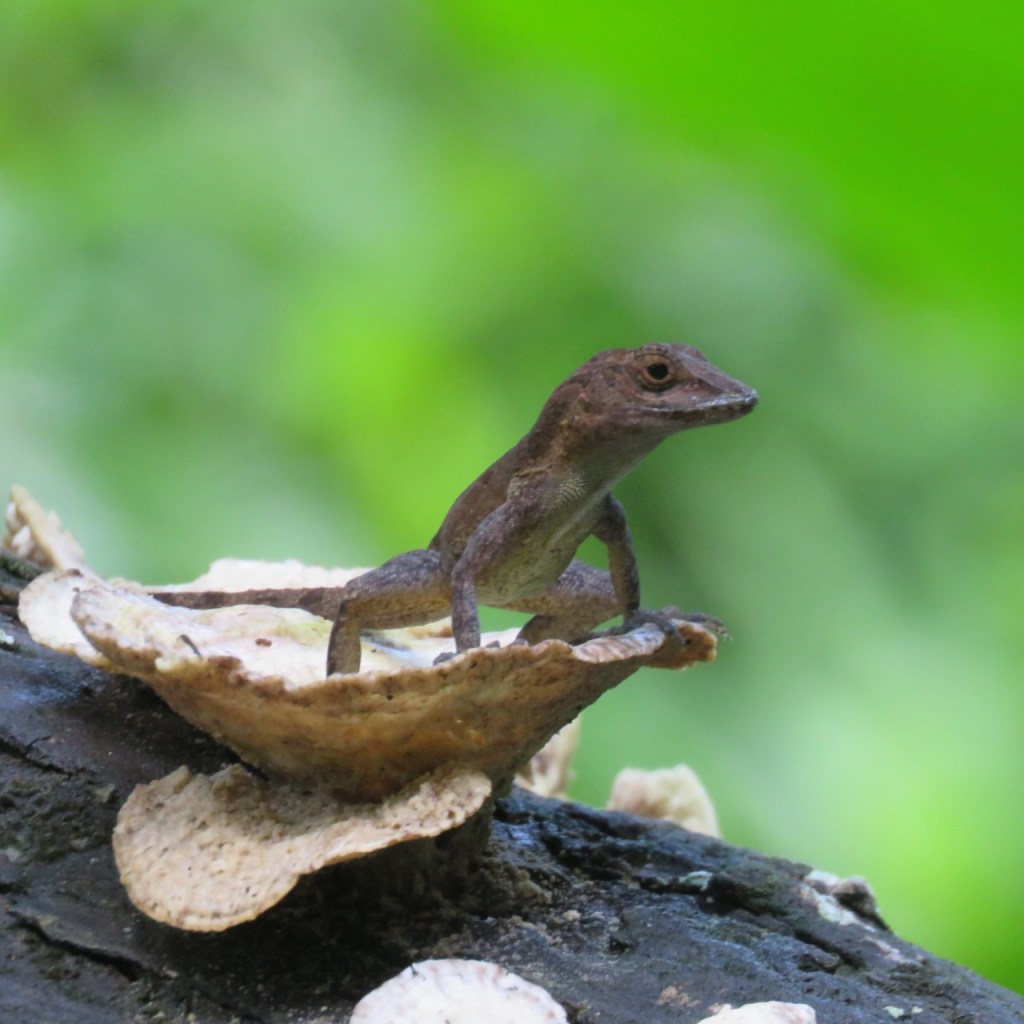
She expressed awe over watching the “lizards free-fall onto leaves below” and having a moment of disbelief “seeing how lizards have evolved into birds”.
When inquired what kind challenges presented themselves during the project, Williams cited the, “rift between scientific data collection and loving nature”.
The difficulty of staying empirical for observation can be hard because of the affect nature has on the nervous system. Guides and trainees have to be able to figure out, how this connection that they are developing with the natural world connects with conservation and citizen science.
In finding a hypothesis and testing it empirically, there is a risk of losing the connection to the ecosystem and the loss of cultural and biodiversity occurs when ecosystems are treated without respect. With the number or field naturalists decreasing from universities, it is important now more than ever to be able to have an emotional experience with wildlife.
Williams was also able to digress about the upcoming projects of the ANFT and was excited about a, “Collaboration between One Tree”. One Tree is an organization that plants trees all over the world with a specialty of working with local communities to find the right tree for that community. They help, “Reconnecting us to our place” Williams said. The organization has found that areas with a higher tree count has decreased violence and increased mental health benefits.
The training project in Puerto Rico seems to have been a resounding success. Hopefully the work of the ANFT will continue to allow people to find purpose in the natural world and participate in the advancement of their local communities. Giving back helps us and the Earth feel a lot happier and healthier.
 The Nature of the Walk Blog